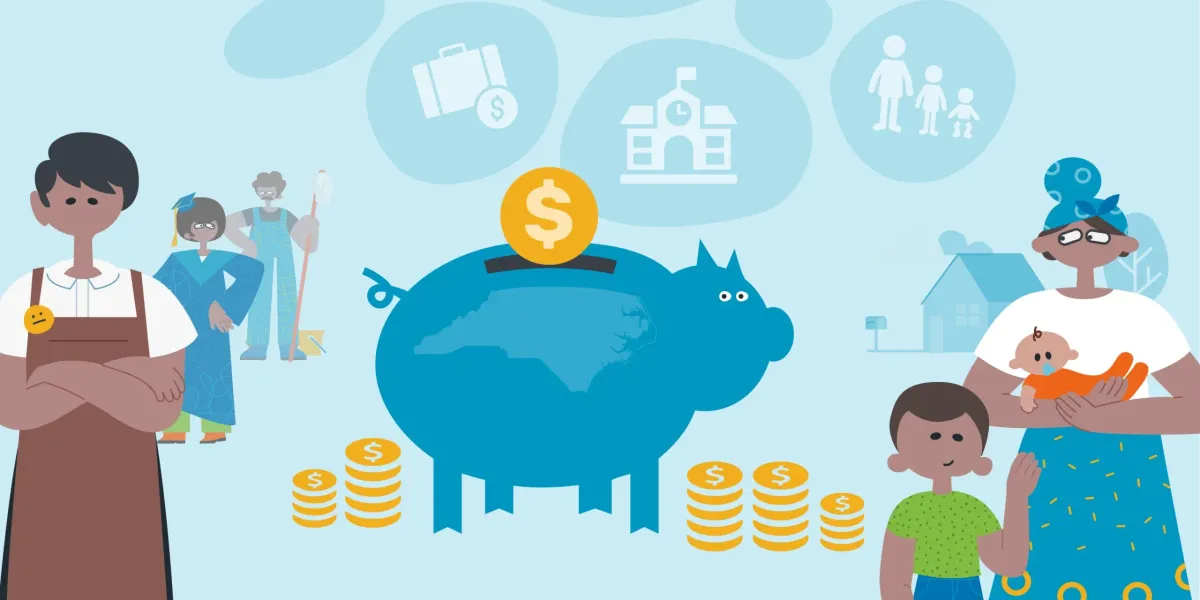
What North Carolina's Proposed State Budget Means for Nonprofits
The North Carolina General Assembly has released its long-awaited budget bill at $34 billion, setting the stage for votes in both chambers. At more than 600 pages, the proposal is complex. But for nonprofit organizations, the most important question isn't "What's in the budget?" It's "What does this mean for our work?"
Below are five takeaways nonprofit leaders should know.
1. Opportunities and Challenges Abound
The budget includes significant investments in policy areas where nonprofits work, creating both opportunities and challenges for organizations that partner with government. While not every nonprofit will benefit directly, many organizations working in education, behavioral health, food security, housing, workforce development, and community resilience will see opportunities created through state and local implementation, but challenges on how big a role the state will play in local nonprofit operations and service provision.
Why it matters
State budgets shape community priorities. Even when funds are not awarded directly to nonprofits, they often influence contracts, partnerships, grant opportunities, and local government investments.
2. Education Equity Remains an Important Opportunity
The budget includes continued investments in public education and funding for school infrastructure, particularly in communities recovering from Hurricane Helene. For nonprofits working alongside schools, this reinforces the importance of maintaining strong relationships with school districts, local boards of education, and community partners.
Questions to consider
How does your organization support student success?
Are there opportunities to strengthen partnerships with your local school district?
How can your organization complement—not duplicate—public investments?
3. Recovery Efforts Continue Beyond Hurricane Helene
The proposal dedicates substantial funding to long-term Hurricane Helene recovery, including support for local governments, agriculture, public infrastructure, emergency management, public schools, and volunteer organizations.
Why it matters
Recovery is no longer just about emergency response.
It is about rebuilding communities, restoring systems, and strengthening resilience. Nonprofits remain critical partners in housing, food access, behavioral health, volunteer coordination, and community recovery.
4. Collaboration Will Matter More Than Ever
One theme emerges throughout the budget: government cannot accomplish these priorities alone.
Whether the issue is education, health, food security, disaster recovery, or economic mobility, implementation will require collaboration among state agencies, local governments, philanthropy, healthcare systems, businesses, and nonprofit organizations.
For nonprofits, this reinforces an important lesson:
Relationships are infrastructure.
Organizations that regularly engage local government, school districts, healthcare systems, and community partners are often better positioned to identify opportunities and respond effectively when funding becomes available.
5. Advocacy Doesn't End When the Budget Passes
Many people think advocacy ends once lawmakers approve a budget.
In reality, implementation is just beginning.
Over the coming months, state agencies, counties, municipalities, school districts, and other public entities will make decisions about how programs are implemented, partnerships are formed, and resources are distributed.
This is where nonprofits have an opportunity to educate decision-makers, share community expertise, and help ensure investments achieve their intended impact.
What Nonprofits Should Do Next
As the budget moves toward final passage, nonprofit leaders should consider:
Reviewing the budget for programs that align with your mission.
Talking with local elected officials and agency partners about implementation.
Identifying opportunities for cross-sector collaboration.
Sharing with policymakers how state investments affect the communities you serve.
Continuing to build relationships before the next legislative session begins.
Remember, budgets are more than spending plans. They are statements of public priorities.
For nonprofits, understanding those priorities is essential—not simply to pursue funding, but to align advocacy, strengthen partnerships, and better serve communities.
The Triad nonprofit sector believes that informed, coordinated nonprofit engagement leads to stronger public policy and stronger communities. As implementation begins, now is the time to stay engaged, ask questions, and continue building the relationships that make collective impact possible.

