Amplifying Sector Priorities: Strategic Issues Framing for the New Year
A new year offers nonprofits a critical opportunity to step back from reactive advocacy and invest in intentional issues framing. With competing demands and rapidly shifting political conditions, organizations that plan strategically are better positioned to amplify sector priorities, deploy resources effectively, and achieve meaningful policy outcomes. A clear strategy framework can help turn advocacy goals into coordinated action.

To support this work, we’ve created an issues framing chart template in the 'Frame Your Issue' section of our toolkit to help nonprofits organize advocacy planning for the year ahead.
Start with clear goals.
Effective issues framing begins by defining what success looks like. Goals should be specific, achievable, and tied directly to an organization’s mission and community impact. Whether the objective is informing new legislation or budget decisions or defending existing programs, clarity helps focus advocacy efforts and guides decision-making throughout the year. Strong goals also provide a foundation for measuring progress and adapting strategy as conditions change.
Assess organizational considerations.
Advocacy strategies must align with internal capacity and constraints. This includes evaluating staff time, leadership and board engagement, political appetite, and available resources. Organizations should consider what level of advocacy is sustainable and where they can realistically lead, support, or participate in broader efforts. Regardless of capacity or constraints, the OSOVT toolkit provides flexible advocacy options so organizations can engage at a level that aligns with their reality. Grounding your plan in organizational reality ensures that strategies are both ambitious and executable.
Map constituents, allies, and opponents.
Understanding who is affected by an issue and who influences outcomes is essential to amplifying sector priorities. Constituents bring lived experience and credibility, allies strengthen collective impact, and opponents shape the political terrain. Strategic planning should identify how to engage each group, where interests align, and how to navigate resistance. This analysis helps nonprofits build stronger coalitions and anticipate challenges before they arise.
Identify targets.
Your key audiences are the decision-makers who have the power to deliver the desired policy outcome. These may include legislators, agency leadership, governors’ offices, or local elected officials. Effective planning requires narrowing focus to the most relevant audience members and understanding their roles, motivations, and timelines. The Elected Leader Tracker in our toolkit outlines municipal, local, state, and federal representatives for the Triad, their election years, and ways to reach them. By clearly identifying who needs to be informed, and when, nonprofits can engage more strategically and avoid scattered advocacy efforts.
Choose tactics that support the strategy.
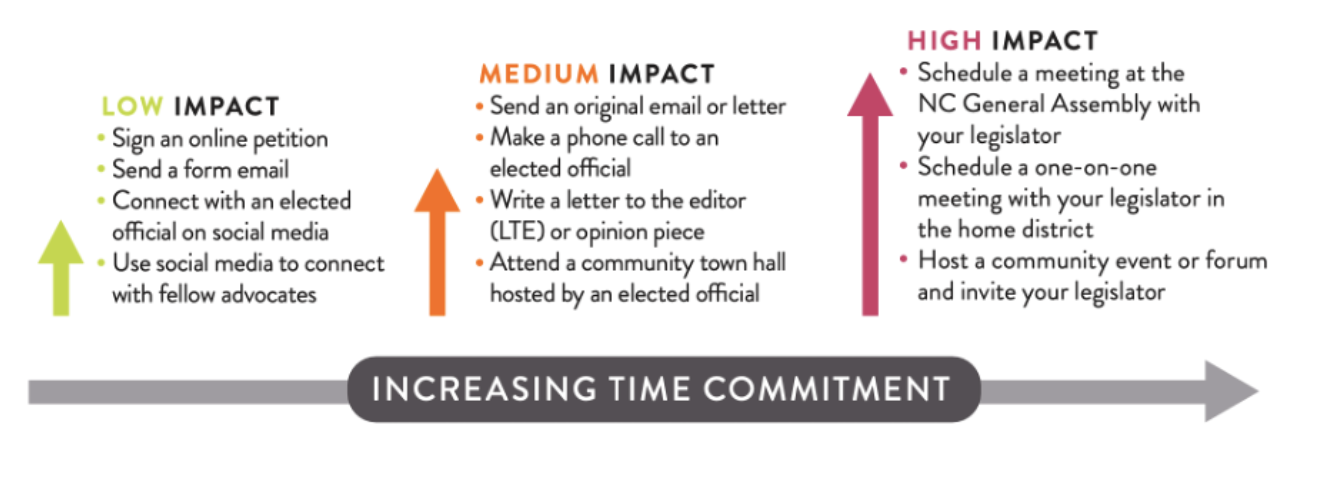
Tactics are the actions used to move your audiences toward the goal. These might include meetings with policymakers, coalition sign-on letters, public comments, media outreach, grassroots engagement, or storytelling campaigns. The most effective tactics are those that align with organizational capacity, resonate with constituents, and match the political moment. Planning ahead allows nonprofits to sequence tactics and deploy them intentionally rather than reactively.
By organizing issues framing around goals, organizational considerations, constituents and allies, targets, and tactics, nonprofits can create a clear roadmap for the year ahead. This structured approach strengthens alignment and helps amplify sector priorities in a crowded policy environment. With thoughtful planning, advocacy becomes not just responsive but strategic, coordinated, and impactful.

